
RESEARCH & NOTES
A Short Guide On The Scrum Teamwork Framework

Explorations > Teamwork > the Scrum framework
Scrum is a teamwork framework originally created for product development teams. It's built on principles that maximize the chance of harnessing a productive combination of brainpower while also not wasting time—and therefore is quite popular.
The Scrum Teams Framework in a nutshell
super simple summary:
If a team is clear on what needs to be achieved, communicates frequently, and chops work up into manageable bites, it doesn’t need to be micro-managed. Smart people can organize themselves and get work done better if they’re given information and guiding structure rather than orders.
Detailed explanation:
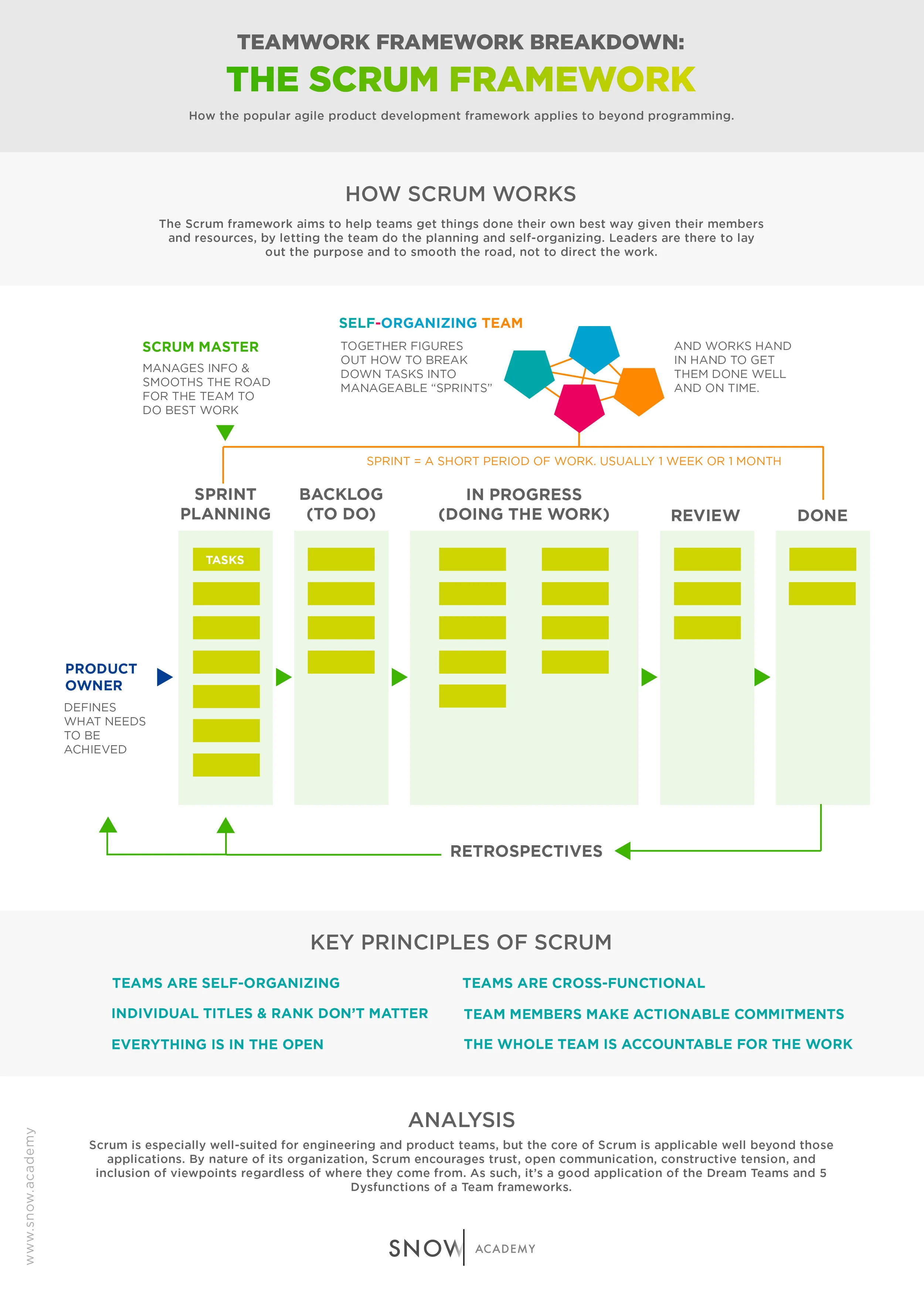
The Scrum framework is built around the idea that a group of people with diverse (as Scrum calls it, cross-functional) skills has the best chance of building things and solving problems together if they’re empowered with information and a structure that clears the road for them to get work done together. As such, Scrum specifies three roles:
-
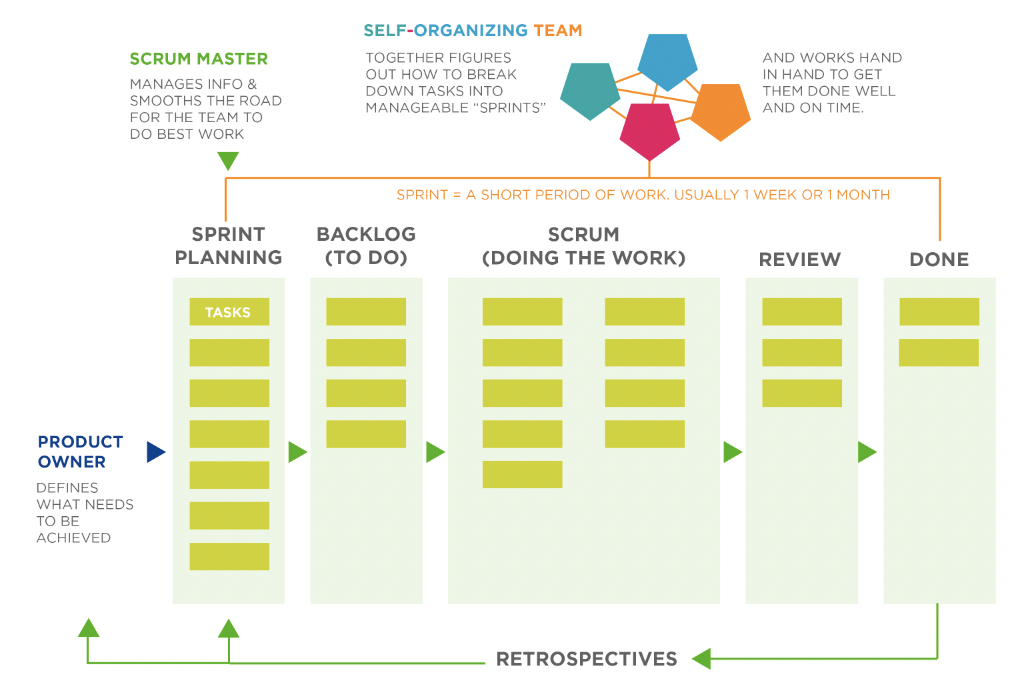
The Product Owner: This is whoever’s in charge of figuring out what needs to be achieved. “We need to build a fort on that hill.” That sort of thing.
-
The Team: This is the group of people who figures out how they’re going to achieve what the Product Owner has set out, and how long it will take—and then goes and does it.
-
The Scrum Master: This is a person whose sole job is to make sure everyone has the information they need to get things done efficiently and effectively. They call daily “stand-up” meetings, keep track of the to-do items and whether they’re in the Backlog (waiting for someone to start on them), In Progress, In Review, or Done.
-
The Sprint: This is not a person, but is a key unit of Scrum. Work is planned in discrete time blocks, called Sprints. Usually these are 1 week or 1 month. Together, the Team breaks down work into to-do items, and plans how many of them they can do in a Sprint. Each Sprint ends with a retrospective, so the team can adapt and get better for the next Sprint.
With this structure in place, the whole group meets periodically (usually every day for no longer than 15 minutes) to plan tasks and make sure everything is clear and on track, and then they go out and get work done. As long as things are tracked—which stage tasks are in which stage, and who’s working on them—then people can work however they like.
One of the keys is the Team itself is accountable for all work. Individuals don’t get blamed when things go wrong; the team does. This orients the team around collective success. If there are problems, it’s in the interest of the team, which is accountable together, to solve them together. (And this includes team member problems.)

What’s The Scrum Teamwork Framework Most effective for?
This framework is best suited for teams that are building things or working on pre-planned work. Scrum is best for teams that have high levels of skill and trust, and managers who can operate with a high level of ego control—meaning they can let go of directing work themselves (and being the “hero”) and focus on clearing the way for others to do work. (And Scrum can also teach these things to team members in the process of using it.)
What’s it less effective for?
While the underlying principles of Scrum are universally helpful, the nature of Sprints makes this framework not as well suited for handling real-time work—such as customer service, emergencies, and crisis management. If things come up that aren’t specifically planned (such as a customer walking in the door, or a business problem arising), they can’t be addressed until the next Sprint without throwing off the current Sprint.
Recommendations for using This framework:
The Scrum framework is an excellent application of many of the principles from the Dream Teams framework. A smart self-organizing team will recognize the value in including diverse skills and perspectives. A team that’s accountable at the group level will be likely to welcome debate and cognitive friction more than an individual who is incentivized to be “right” themselves. And the nature of Scrum leadership encourages intellectual humility.
I recommend you try it especially if you’re actively working on building things or solving problems that you can plan ahead for.
Recommended further resources:
-
The Ultimate Guide to Trust in Teams
-
Shifting From Hero Leadership To Conductor Leadership
-
The Dream Teams Guide to Productive Conflict & Cognitive Friction
-
The Ultimate Guide to Intellectual Humility


For more on maximizing your teamwork productivity: Check out the Snow Academy course on The Skills of Dream Teams!



![Universal Principles For Better Teamwork [Infography]](https://cdn.prod.website-files.com/6977cdf91b227f93236c1cf7/69a8dd4a21fe9822a5e5f968_sebastien-bonneval-1AEx2Voy8cI-unsplash.jpeg)