
RESEARCH & NOTES
A Short Guide to The Art of Teamwork Framework

Explorations > Teamwork > the art of teamwork
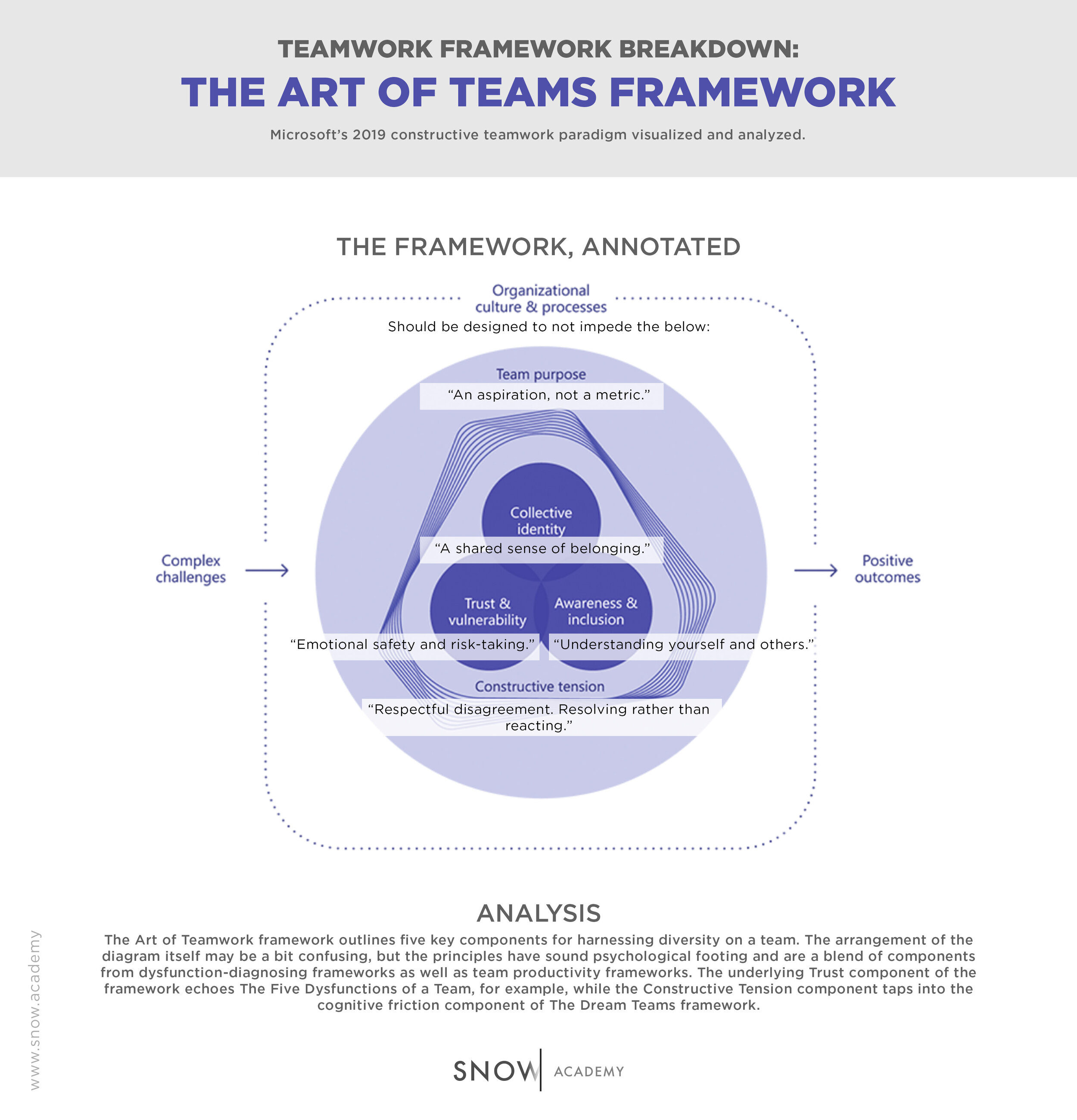
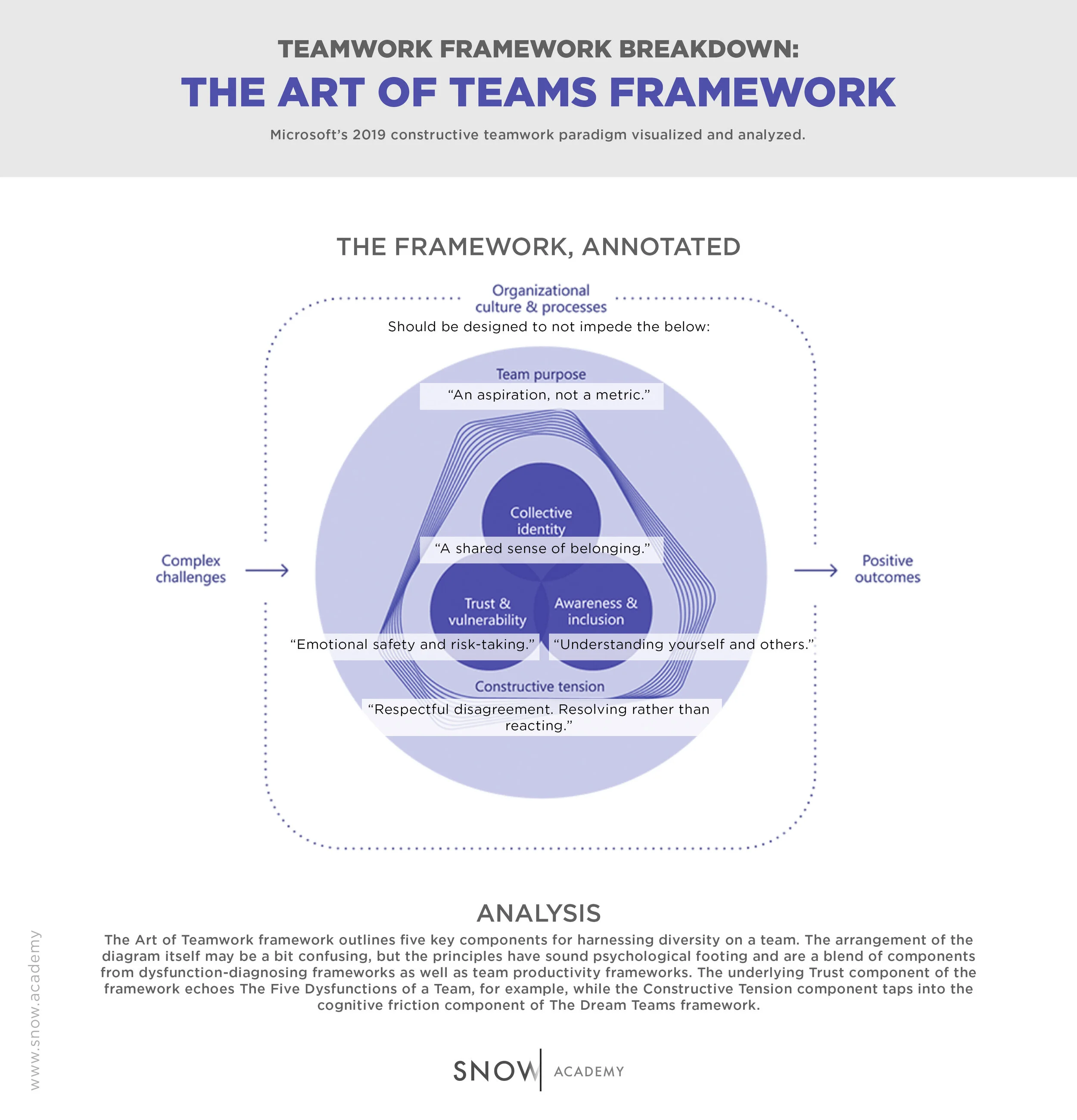
The Art of Teamwork framework was developed by Microsoft Teams in 2019 as an all-encompassing model for productive collaboration in the 21st century. It incorporates the latest in research on diversity and inclusion, collective identity, and constructive tension.
The Art of Teamwork Framework in a nutshell
super simple summary:
Teams are most effective when people feel like they belong, are thoughtful of others and trust each other enough to have hard conversations. Rallying around an aspirational goal helps them to do all that.
Detailed explanation:
This framework proposes that complex challenges are best approached by a team that has a strong shared purpose and organizational processes that allow the following:
-
Collective Identity—or a true sense of belonging to the team. This is built through team rituals, values, and agreements.
-
Awareness & Inclusion—or the ability to identify at any given time the following:
-
How you’re doing feeling (self-awareness)
-
How others are doing and feeling (emotional intelligence)
-
The big picture situation you and your team are in (situational awareness)
-
-
Trust & Vulnerability—As with the Five Dysfunctions of a Team framework, the ability to trust teammates’ intentions and to be vulnerable is paramount. The Art of Teamwork framework says that this “psychological safety” must be part of the broader culture to work.
-
Constructive Tension—diverse perspectives lead to conflicts between the ways people see things. Instead of avoiding or smashing divergent points of view, an effective team will recognize the tension and use it as a cue to build and explore together. This is similar to the way the Dream Teams framework lays out Cognitive Friction.
What’s The Art of Teamwork Framework Most effective for?
This framework, and especially the accompanying digital guidebook on Microsoft’s website, is excellent for a very quick overview of useful team principles. If all you have is ten minutes, this framework packs a lot of punch in that time.
What’s it less effective for?
Though the five principles are universal and worthwhile, there’s more to do if you’re looking for advanced team practices for making breakthroughs. For example, even with trust and constructive tension, a problem-solving team needs adaptability and flexibility if it wants to make use of its diverse ingredients (see: intellectual humility). So consider this framework an excellent entry point rather than the end point.

![Universal Principles For Better Teamwork [Infography]](https://cdn.prod.website-files.com/6977cdf91b227f93236c1cf7/69a8dd4a21fe9822a5e5f968_sebastien-bonneval-1AEx2Voy8cI-unsplash.jpeg)