
RESEARCH & NOTES
A Short Guide On The McKinsey Teamwork At The Top Framework

Explorations > Teamwork > the Mckinsey Teamwork At the Top framework
Consulting firm McKinsey's 2001 framework, Teamwork at the Top, may be a couple decades old and needlessly confusing, but it is still held up as guiding model for C-Level team thinking due to its solid underlying ideas.
The Teamwork at the Top Framework in a nutshell
super simple summary:
Great team leaders make sure they are constantly growing and taking in new ideas from different places. They also make sure their team members know the team’s goals and don’t have any conflicting goals that get in the way.
Detailed explanation:
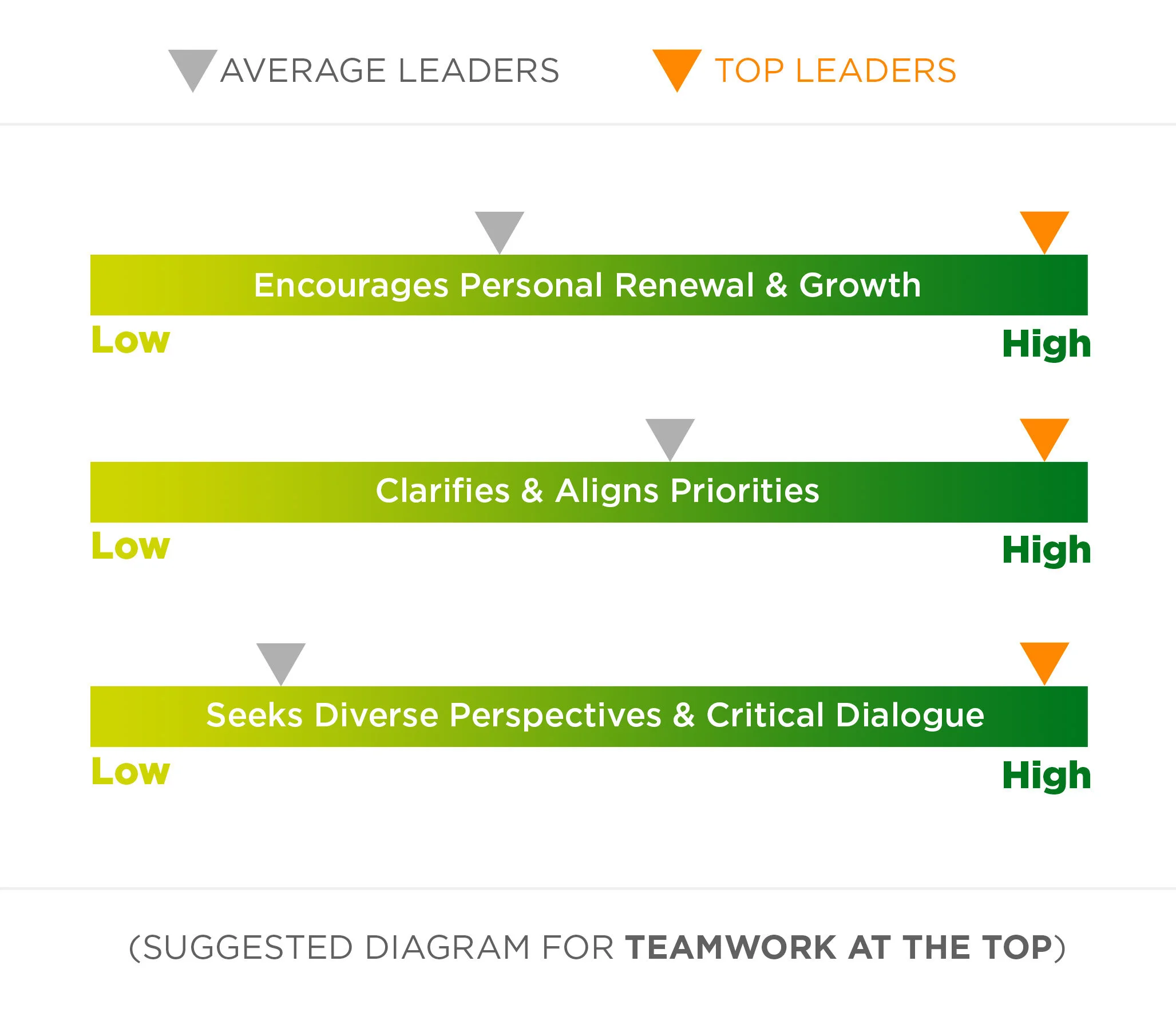
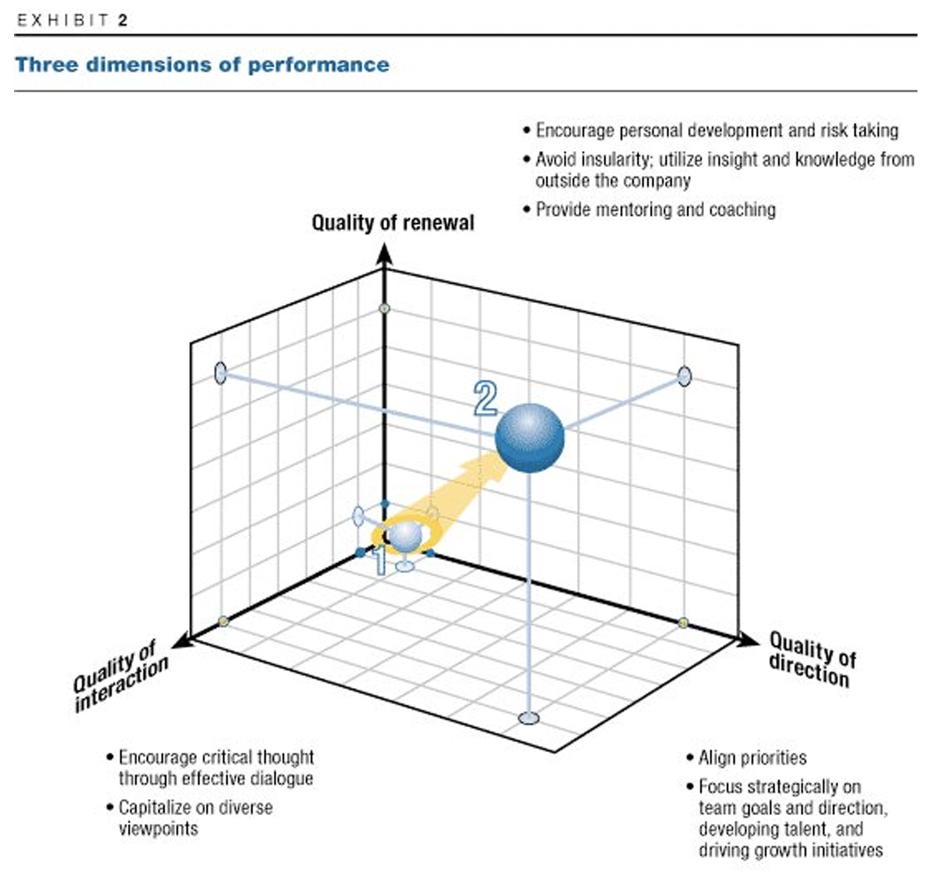
The Teamwork at the Top framework proposes that team leaders are all somewhere on the spectrum of Bad–Good in three areas:
Renewal—a.k.a. learning and growth. Good leaders encourage personal development. They seek outside perspectives periodically, so they don’t get stuck in outdated ways of thinking. And they are big on mentorship and coaching.
Interaction—a.k.a. diversity and inclusion: Good leaders recognize that different viewpoints are essential to solving problems, so they encourage different people to show up and speak up. They don’t just want different thinking; they want “critical thinking” around those differences.
Direction—a.k.a. being clear about, and clearing the way for, priorities: Good leaders make sure that the team’s goals are unquestionably clear. But more than that, they make sure that no individual’s goals conflict with the team’s goals.
In a way, Teamwork at the Top is a more complicated way of framing the Dream Teams framework, with some principles of the Scrum framework worked in:
What’s The Teamwork at the Top Framework Most effective for?
This framework is well-suited for leaders of teams who need extra justification for investing in employee development and growth—and who want reminders of some key, perhaps obvious, things that matter for teams that are working on hard problems: clear purpose and goals, different perspectives, and growth.
What’s it less effective for?
The framework itself is confusing, since it uses terms and charts that are more complicated than they need to be. So it’s not going to be as effective for teaching broader teams. It also lacks key components, either by omission (such as adaptability/intellectual humility) or because it doesn’t spell them out (such as the productive conflict, which it just implies).
Recommendations for using This framework:
Teamwork at the Top is more helpful if, instead of the 3-d diagram, you visualize the framework like this:

Recommended further resources:
The Dream Teams framework
The Scrum framework
The Dream Teams Guide to Productive Conflict & Cognitive Friction
The Ultimate Guide to Intellectual Humility

For more on maximizing your teamwork productivity: Check out the Snow Academy course on The Skills of Dream Teams!



![Universal Principles For Better Teamwork [Infography]](https://cdn.prod.website-files.com/6977cdf91b227f93236c1cf7/69a8dd4a21fe9822a5e5f968_sebastien-bonneval-1AEx2Voy8cI-unsplash.jpeg)