
RESEARCH & NOTES
Reexamining the teamwork principles from Built to Last & Good to Great

Explorations > Teamwork > the built to last / good to great team principles
It's not exactly accurate the call the management bestsellers Good To Great and Built To Last "frameworks" for teamwork—though they do contain teamwork principles within their broader management advice.
Since these books have sold millions of copies, I wanted to make sure to address their ideas on teamwork as part of this series on teamwork frameworks.
The Built to last / good to great teamwork principles in a nutshell
super simple summary:
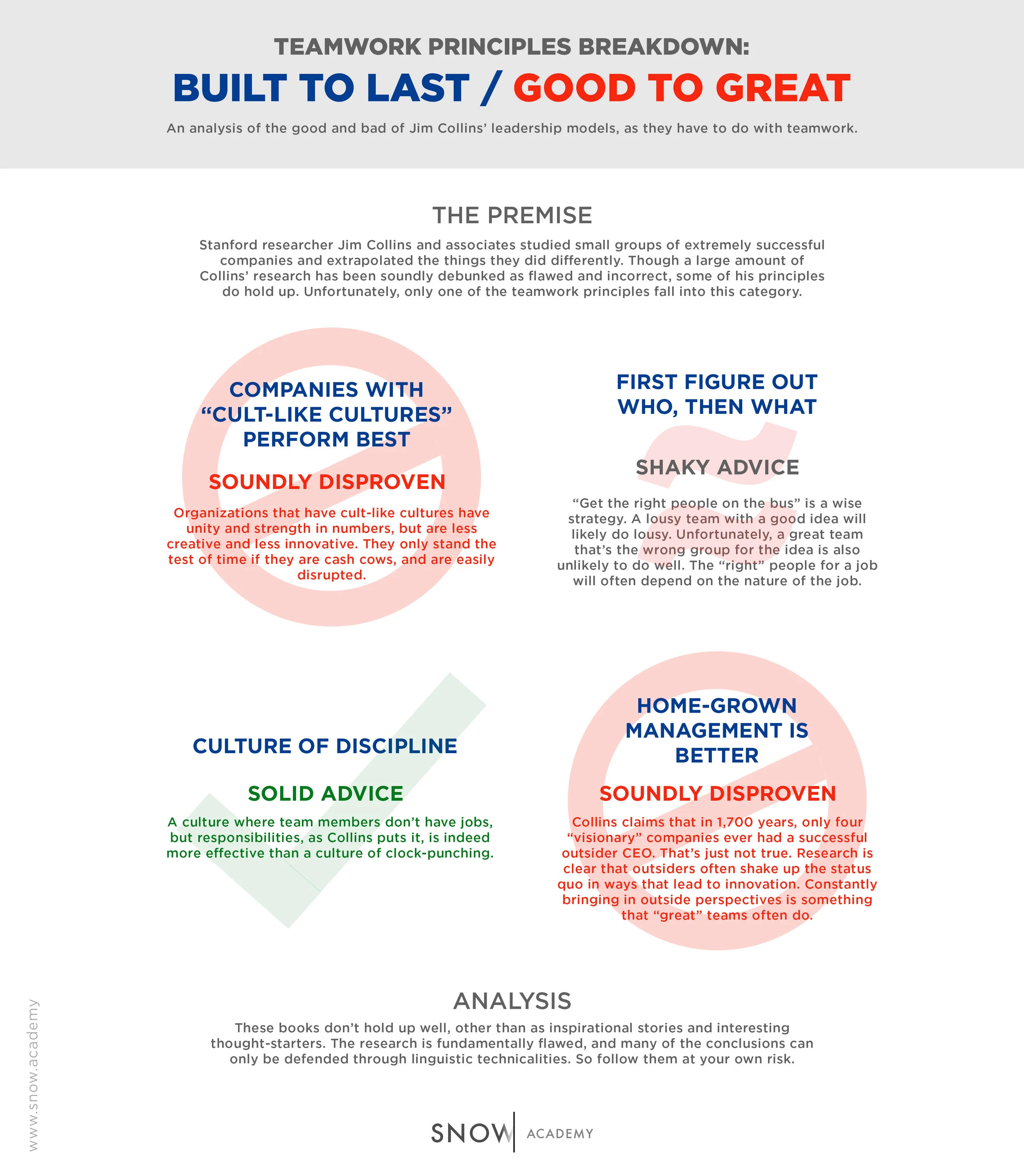
Most of the team-related advice in these books has been proven unreliable. But focusing on building teams of great people who take responsibility for success is timeless good advice.
Detailed explanation:
Each of the books takes a look at exemplary companies and breaks down what they have in common versus less exemplary companies. Unfortunately, this style of analysis suffers from some serious logical flaws. For example, we don’t see the many companies that did the same things as the great companies and yet failed—because they failed and went away.
The primary team-focused principles in the books are the following:
-
Cult-Like Cultures—shared values and behaviors create high performance. This has been shown to be profoundly dangerous advice. Strict values and behaviors create unity and strength in numbers, but stifle creativity.
-
First Figure Out Who, Then What—before you figure out your strategy, figure out who to execute it. This is sort of strange blanket advice. On the one hand, a bad team working on a great strategy is not likely to do well. On the other hand, a great group of people might be a good team but a bad fit for a problem. Teams should be assembled based on the challenge—unless you literally don’t care what you’re working on.
-
Culture of Discipline—Collins distinguishes doing a job and taking responsibility for it. Team members who are highly invested in the success of their work—such as those who are driven by an aspirational purpose, tend to put the team first and perform better.
-
Home-Grown Management Is Better—Collins claims that training leaders up from within an organization is definitively better. But research is clear that bringing in outside thinking is often smarter for an organization.


For more on maximizing your teamwork productivity: Check out the Snow Academy course on The Skills of Dream Teams!

![Universal Principles For Better Teamwork [Infography]](https://cdn.prod.website-files.com/6977cdf91b227f93236c1cf7/69a8dd4a21fe9822a5e5f968_sebastien-bonneval-1AEx2Voy8cI-unsplash.jpeg)